

For decades, people across the world have been chasing a magic number — 10,000 steps a day. It became the universal benchmark for health, fitness, and longevity. Fitness trackers, smartphone apps, and wellness programs have all promoted this idea as the golden rule for staying active and preventing lifestyle diseases. But as it turns out, Japan — a country known for its discipline, long lifespan, and wellness traditions — might hold a more effective and sustainable secret when it comes to walking for better health.

This Japanese method not only outperforms the 10,000-step rule in efficiency but also focuses on quality over quantity, making it ideal for people of all ages. It’s known as “The Japanese Walking Secret” — or more specifically, a unique approach to mindful and posture-focused walking that enhances health, balance, and longevity far beyond simple step-counting.
Let’s dive deep into this fascinating practice, explore how it works, and understand why it’s changing the way we think about movement.
The Origin of the 10,000 Steps Myth
Before we uncover the Japanese secret, it’s important to know where the 10,000 steps rule came from — because it wasn’t actually rooted in science.
The idea originated in 1965, when a Japanese company launched a pedometer called “Manpo-kei,” which literally means “10,000 steps meter.” The number sounded catchy and motivating, and the marketing worked brilliantly. Soon, walking 10,000 steps a day became associated with health and fitness worldwide.
However, modern studies have shown that you don’t necessarily need 10,000 steps a day to achieve health benefits. In fact, research from Harvard Medical School and JAMA Internal Medicine found that older adults who walked just 7,500 steps per day had significantly lower mortality rates — and the benefits plateaued beyond that.
So if 10,000 steps isn’t a magic number, what really matters?
Japan has an answer — and it’s all about how you walk, not just how much.
Introducing the Japanese Walking Secret: Shinrin-Yoku and Kaizen Walking
The Japanese walking approach is not about hitting a step target. It’s about mindful movement, posture, and purpose. Two key philosophies drive it:
- Shinrin-Yoku (森林浴) — “Forest Bathing”
- Kaizen Walking — Continuous improvement in walking technique and daily motion
Both practices embody the essence of Japanese culture: harmony, mindfulness, and balance.
1. Shinrin-Yoku: The Healing Power of Walking in Nature
“Shinrin-Yoku,” or “forest bathing,” is a therapeutic practice developed in Japan in the 1980s. It encourages people to immerse themselves in natural environments — not to exercise intensely, but to reconnect with nature through slow, mindful walking.
When you walk through a forest, park, or even a garden mindfully, your body relaxes, your heart rate lowers, and your mind declutters. Scientific studies from Japan’s Chiba University and Tokyo Medical School have found that Shinrin-Yoku:
- Reduces cortisol levels (stress hormone)
- Improves immune system function
- Lowers blood pressure
- Enhances mood and sleep quality
It’s a form of walking meditation, where every step is deliberate, every breath is deep, and every sound or scent from nature grounds you in the present moment. Instead of mindlessly chasing a step counter, you focus on the experience of walking itself.
2. Kaizen Walking: Small Steps Toward Perfect Movement
The second part of the Japanese walking secret comes from the principle of Kaizen, which means “continuous improvement.” While Kaizen is often used in business management and manufacturing, its philosophy has expanded into personal development — including physical movement.
Kaizen Walking involves improving your walking technique over time through small, consistent adjustments. It focuses on:
- Posture – keeping your spine straight, shoulders relaxed, and core engaged
- Balance – distributing weight evenly with every step
- Breathing – coordinating breath with stride
- Mindfulness – staying aware of your body’s rhythm and surroundings
This method transforms walking from a casual habit into a form of active self-care. By refining your walking technique, you can prevent joint pain, improve circulation, and burn calories more efficiently — even if you walk less than 10,000 steps.
Why This Method Outperforms 10,000 Steps
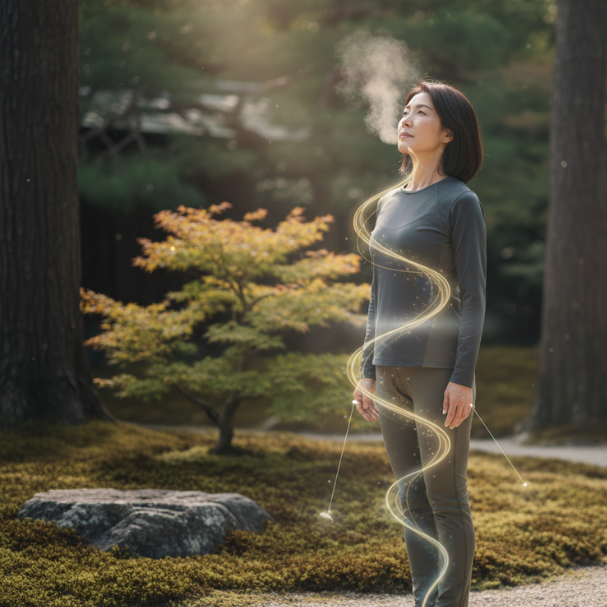
At first glance, walking fewer steps might seem less beneficial. But here’s the science-backed truth: the Japanese method focuses on efficiency, mindfulness, and physiological benefit, not just numbers. Let’s look at why this works better.
1. It Activates More Muscles
Walking mindfully with proper form — upright posture, core engagement, and smooth gait — activates your core, glutes, and leg muscles more effectively. In contrast, casual walking often becomes a passive motion where you rely mainly on your legs.
By applying Kaizen principles, every step becomes a mini full-body workout.
2. It Reduces Stress More Deeply
Unlike urban walking where distractions are everywhere, Shinrin-Yoku reduces sympathetic nervous system activity, which controls your “fight or flight” response.
Instead, it activates the parasympathetic system, responsible for calm and restoration.
This balance helps reduce anxiety, improve mental clarity, and boost emotional stability far more than a treadmill walk ever could.
3. It’s Sustainable for Life
Let’s face it — walking 10,000 steps daily can feel overwhelming, especially for people with busy schedules, sedentary jobs, or mobility challenges. But mindful Japanese walking can be done anywhere, anytime, and at your own pace.
Even 20 to 30 minutes a day of Kaizen or forest walking can deliver comparable — if not better — health outcomes.
4. It Improves Posture and Longevity
Japanese walking emphasizes alignment — head upright, back straight, and shoulders open.
This posture promotes better oxygen intake, spinal health, and circulatory efficiency. Over time, it reduces chronic pain and fatigue, common issues in people who walk long distances incorrectly.
Good posture walking also stimulates balance and coordination, which are crucial for longevity and fall prevention in older adults.
5. It Connects Mind and Body
Perhaps the greatest advantage is the mind-body connection.
Western walking routines often focus on calorie burn and metrics. The Japanese way brings awareness to how you feel as you move — your breathing, heartbeat, and mental state.
This deeper connection builds emotional resilience and mindfulness, enhancing both mental and physical wellness.
How to Practice the Japanese Walking Method
Ready to try it yourself? You don’t need to travel to Japan or find a dense forest — you can start right where you are. Follow these steps to integrate this method into your lifestyle.
Step 1: Find a Calm Environment
Ideally, choose a green space — a park, garden, or quiet neighborhood with trees.
If that’s not possible, a peaceful area indoors or even your backyard works too. The goal is to minimize distractions.
Step 2: Center Your Mind Before You Start
Before you take your first step, pause for a moment. Take a deep breath, close your eyes, and focus on the sounds around you. Feel the ground beneath your feet.
This mental reset helps transition your mind from “doing” to “being.”
Step 3: Maintain Correct Posture
Japanese walking begins with awareness of your body.
- Keep your head upright, as if a string is gently pulling it toward the sky.
- Relax your shoulders and jaw.
- Engage your core slightly.
- Let your arms swing naturally with each step.
This alignment reduces strain on your joints and enhances breathing.
Step 4: Synchronize Breath with Movement
Inhale deeply for three steps, and exhale slowly for three steps.
This rhythm not only oxygenates your body but also turns walking into a form of meditation.
Step 5: Walk Slowly and Mindfully
Forget pace and distance for now. Walk slowly enough to notice your surroundings — the sound of birds, the rustle of leaves, or the breeze on your skin. The goal is to immerse yourself fully in the moment.
Step 6: Reflect After Walking
When you finish, take a few deep breaths again.
Notice how your body feels — lighter, calmer, more grounded.
This reflection anchors your experience and encourages consistency.
The Science Behind the Japanese Walking Method

It’s not just philosophy — science supports these practices.
Multiple studies from Japan, Europe, and the U.S. have confirmed the measurable benefits of mindful and posture-based walking.
- Tokyo Medical University (2010) found that walking in natural settings lowered blood pressure and cortisol more effectively than urban walking.
- Kyoto University (2018) demonstrated that posture-focused walking improved balance and muscle activation, even in elderly participants.
- Harvard Health Publishing (2019) showed that mindful movement practices like Shinrin-Yoku reduced symptoms of depression and anxiety.
Together, these findings prove that quality of steps outweighs quantity when it comes to wellness.
Real-Life Example: Japan’s Longevity Secret
Japan consistently ranks among the healthiest and longest-living populations in the world, with life expectancy surpassing 84 years.
While diet, social structure, and healthcare play major roles, daily movement — particularly mindful walking — is a key part of their lifestyle.
In Japanese cities, walking is seamlessly integrated into everyday life. People walk to work, to markets, and through nature trails. But it’s their intentional way of walking — calm, upright, and connected — that makes the difference.
Even in elderly communities like Okinawa, home to some of the world’s oldest centenarians, walking is considered a meditative ritual, not a chore. This cultural mindset supports both mental clarity and physical endurance.
Modern Variations of the Japanese Walking Secret
You don’t need to live in Japan to adopt this practice. Several modern interpretations are making it accessible globally:
- Forest Therapy Walks – Guided Shinrin-Yoku sessions are now offered in wellness resorts worldwide.
- Posture Training Apps – Some fitness apps integrate Kaizen principles, tracking walking form rather than step count.
- Slow Walking Meditation – Yoga and mindfulness communities promote slow, deliberate walking as part of mental health routines.
- Corporate Wellness Programs – Japanese companies encourage employees to take short, mindful walks during work hours to improve focus and productivity.
These adaptations show that this ancient method can thrive in the modern world — blending technology and tradition seamlessly.
Common Mistakes to Avoid
When starting this journey, beginners often make small errors that can limit benefits. Here’s what to watch out for:
- Walking too fast: Speed is not the goal; awareness is.
- Looking down at your phone: This ruins posture and mindfulness.
- Ignoring breath: Breathing rhythm is central to mental and physical benefits.
- Tension in shoulders or arms: Relaxation is key to proper energy flow.
- Inconsistency: A few minutes daily is better than a long walk once a week.
Remember, the Japanese philosophy of Kaizen means steady, gradual improvement — not instant perfection.
How Many Minutes a Day Is Enough?
You might wonder how long you should practice.
Studies suggest that just 20–30 minutes of mindful walking five times a week is enough to improve cardiovascular health, mood, and muscle tone.
If you combine this with natural surroundings — even a small park — you’ll gain amplified benefits from phytoncides (plant-based compounds) that enhance immunity and reduce inflammation.
Turning Walking Into a Lifelong Habit
The beauty of the Japanese method lies in its simplicity. You don’t need equipment, a gym, or an app. You just need intention.
Here are some tips to turn it into a habit:
- Schedule short walks after meals or during breaks.
- Walk without headphones sometimes — let nature be your soundtrack.
- Pair it with gratitude — think of three things you’re thankful for as you walk.
- Track feelings, not steps — note your mood and energy after each walk.
- Invite friends or family — group Shinrin-Yoku sessions can strengthen social bonds.
When walking becomes a mindful ritual rather than a fitness task, it naturally fits into your lifestyle.
The Takeaway
The Japanese walking secret isn’t about reaching 10,000 steps — it’s about walking with purpose, posture, and peace. By blending ancient wisdom with modern science, it shows that true wellness doesn’t come from numbers but from intentional movement and connection with nature.
So the next time you lace up your shoes, don’t rush to hit your daily step goal. Instead, slow down, breathe deeply, and let every step carry mindfulness and vitality. Because in the end, walking isn’t just a way to move — it’s a way to live.
And now, taking care of your wellness journey is even easier. All you need to do is fill up the Ciranox sign-up form to get subscription access to personalized guidance, nutrition insights, and expert wellness support — and start your journey to a healthier, more mindful life today.