

We all know how important sleep is for our health, mood, and overall well-being. Yet, millions of people around the world struggle to get enough quality rest every night. While factors like stress, screen time, and lifestyle choices play a role in how well we sleep, one area that’s often overlooked is what we eat. Believe it or not, your diet has a powerful impact on your sleep cycle — from how quickly you fall asleep to how deeply you rest.
This guide explores how food affects your sleep, which nutrients can support a good night’s rest, what to eat and avoid before bedtime, and how to build a sleep-friendly eating routine.
How Food Affects Your Sleep
The food you eat influences various biological processes in your body that regulate your sleep-wake cycle, including the production of hormones like melatonin and serotonin. These hormones are responsible for controlling your internal clock and helping you transition smoothly from wakefulness to sleep.

Your diet can also affect your digestion, metabolism, and body temperature — all of which play roles in how easily you fall asleep and how restful your sleep is. For example, heavy meals or caffeine before bed can cause discomfort and disrupt your sleep. Meanwhile, certain nutrients like magnesium, tryptophan, and complex carbohydrates can help your body produce more of the sleep-friendly hormones you need.
Simply put, what you eat during the day — and especially before bed — can either make or break your sleep quality.
Key Nutrients That Support Sleep
To build a diet that encourages better sleep, it’s essential to understand which nutrients play a key role. Here are some of the most important ones:
1. Tryptophan
Tryptophan is an amino acid that helps your body produce serotonin, a neurotransmitter that later converts into melatonin, the hormone that regulates sleep. Foods high in tryptophan include turkey, chicken, eggs, nuts, seeds, tofu, and dairy products.
2. Magnesium
Magnesium is often called the “relaxation mineral” because it helps calm your muscles and nervous system. It also supports the production of melatonin. Foods rich in magnesium include leafy greens (like spinach and kale), almonds, avocados, and bananas.
3. Calcium
Calcium works with tryptophan to produce melatonin and also supports muscle relaxation. Dairy products, yogurt, and fortified plant milks are excellent sources of calcium.
4. Vitamin B6
Vitamin B6 plays a role in converting tryptophan into serotonin, and later melatonin. You can find B6 in foods such as bananas, chickpeas, potatoes, and fish like salmon or tuna.
5. Complex Carbohydrates
Complex carbs help your brain absorb tryptophan more efficiently, making them a smart choice for dinner or an evening snack. Whole grains, brown rice, quinoa, and oats are good examples.
6. Omega-3 Fatty Acids
These healthy fats found in foods like salmon, chia seeds, and walnuts can support serotonin production, improving both mood and sleep quality.
7. Antioxidants
Fruits rich in antioxidants, such as cherries, kiwis, and berries, may reduce oxidative stress and help regulate your sleep cycle.
Best Foods to Eat for Better Sleep
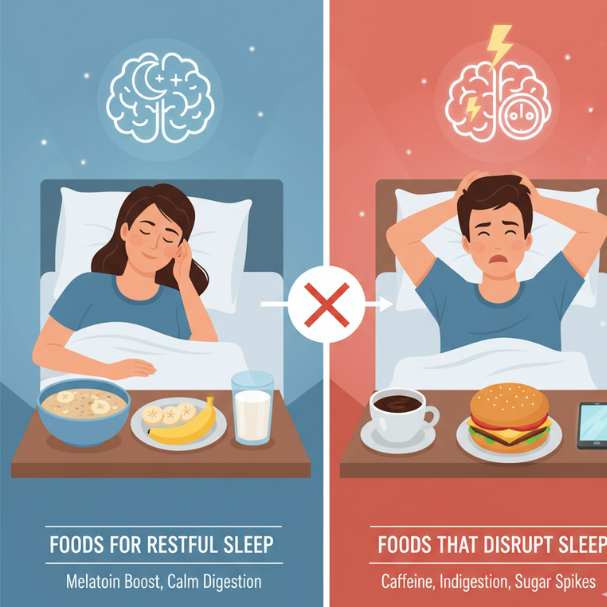
If you’re looking to improve your sleep naturally, incorporating these foods into your diet may make a real difference:
1. Bananas
Bananas are a great bedtime snack because they contain magnesium, potassium, and vitamin B6 — all of which help your body relax and produce melatonin.
2. Almonds
Almonds are rich in magnesium and healthy fats, which can promote steady blood sugar levels and relaxation before bed.
3. Kiwi
Studies have shown that people who eat kiwi before bedtime fall asleep faster and sleep longer. Kiwis contain serotonin and antioxidants that support restful sleep.
4. Oatmeal
Oats are a source of melatonin and complex carbohydrates that help your body absorb tryptophan. A small bowl of oatmeal in the evening can calm your body before bed.
5. Cherries
Cherries — especially tart cherries — are one of the few natural sources of melatonin. Drinking a small glass of cherry juice or eating a handful of fresh cherries can help improve your sleep duration.
6. Warm Milk
A timeless bedtime drink, milk contains tryptophan and calcium that help your brain produce melatonin. Even plant-based milks like almond or oat milk can have similar relaxing effects.
7. Herbal Teas
While not technically “food,” herbal teas like chamomile, lavender, and valerian root tea are known for their soothing properties and ability to promote relaxation before bed.
Foods and Drinks to Avoid Before Bedtime
While some foods can help you sleep better, others can make it harder for you to fall asleep or stay asleep through the night. Here are a few to watch out for:
1. Caffeine
Caffeine is a well-known stimulant found in coffee, tea, chocolate, and some sodas. Even a small amount of caffeine in the evening can interfere with your sleep, as it stays in your system for several hours.
2. Alcohol
While alcohol might make you drowsy initially, it disrupts your sleep cycle and reduces the quality of your rest, often causing you to wake up during the night.
3. Spicy Foods
Spicy foods can cause indigestion, heartburn, and even raise your body temperature — all of which can keep you from falling asleep comfortably.
4. Heavy or Fatty Meals
Large, greasy meals take longer to digest and can cause bloating or discomfort, especially if eaten close to bedtime.
5. Sugary Foods
Foods high in sugar can spike your blood sugar levels and cause fluctuations in energy, making it difficult for your body to settle down.
Timing Matters: When You Eat Affects Your Sleep
It’s not just what you eat, but when you eat that matters. Eating too close to bedtime can cause indigestion and make it harder to fall asleep, while eating too early might leave you feeling hungry later in the night.
A good rule of thumb is to finish your last meal at least 2–3 hours before bedtime. This gives your body enough time to digest food and settle before sleep.
If you get hungry close to bedtime, go for a light snack that combines a bit of protein and complex carbohydrates — such as a small bowl of oatmeal with fruit, yogurt with nuts, or a banana with peanut butter.
How Your Daily Eating Habits Affect Sleep
Improving your sleep isn’t just about the foods you eat before bed; your entire day’s diet plays a role. Here are some daily habits to consider:
-
Eat balanced meals: Include a mix of protein, healthy fats, and complex carbohydrates in every meal to keep your energy stable throughout the day.
-
Stay hydrated: Dehydration can cause muscle cramps and restlessness at night, but try to drink most of your fluids earlier in the day to avoid late-night bathroom trips.
-
Avoid skipping meals: Skipping meals can cause blood sugar drops that may make you feel tired during the day but wired at night.
-
Limit caffeine after noon: Caffeine can linger in your body for up to 6 hours, so try cutting off coffee or caffeinated drinks after lunchtime.
When you nourish your body throughout the day, you help regulate your internal clock, making it easier to fall asleep and wake up at consistent times.
Creating a Sleep-Friendly Evening Routine
Eating right is only part of the equation. Pairing your evening nutrition with good bedtime habits can maximize your results.
Try these tips:
-
Dim the lights an hour before bed to signal your body that it’s time to wind down.
-
Avoid screens before sleep — blue light from phones and computers can suppress melatonin production.
-
Practice relaxation techniques like deep breathing or gentle stretching.
-
Keep your room cool, dark, and quiet for a more restful environment.
Combining these habits with a sleep-supportive diet can help you build a strong nighttime routine that promotes consistent, quality sleep.
Sample Day of Eating for Better Sleep
Here’s an example of what a sleep-friendly day of eating might look like:
Breakfast: Oatmeal topped with banana slices and a sprinkle of chia seeds
Lunch: Grilled chicken with brown rice and steamed spinach
Snack: Greek yogurt with honey and almonds
Dinner: Baked salmon with quinoa and roasted vegetables
Evening Snack: Kiwi or a glass of warm milk
This plan includes foods rich in magnesium, calcium, tryptophan, and complex carbs — all of which support the production of sleep-regulating hormones.
Why Better Sleep Starts on Your Plate
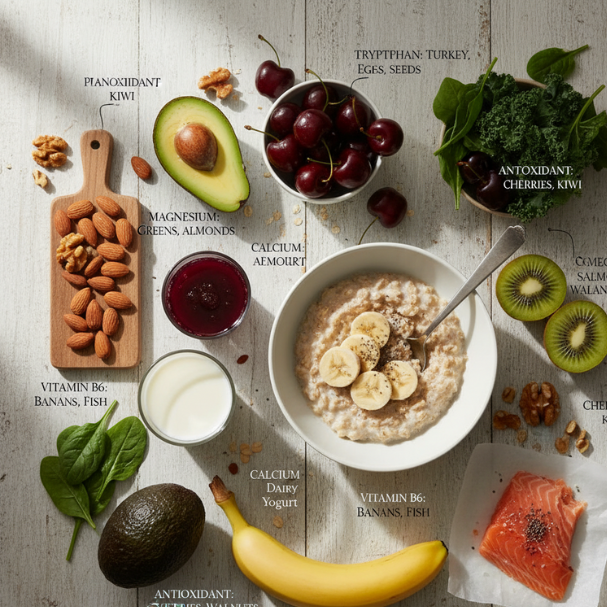
Sleep is one of the pillars of health, and nutrition is its foundation. The foods you eat throughout the day directly affect how your body produces hormones, digests energy, and recovers during rest. While there’s no single “miracle food” that will fix sleep problems overnight, small, consistent changes to your eating habits can have a powerful cumulative effect.
By focusing on whole, nutrient-rich foods and avoiding stimulants or heavy meals before bed, you’re giving your body the best chance to rest deeply and wake up refreshed.
Final Thoughts
Eating for better sleep is about creating harmony between your diet and your body’s natural rhythms. When you fuel your body with sleep-friendly nutrients, you’re not just improving your nights — you’re also enhancing your energy, mood, and focus during the day.
Start by making small changes: swap late-night snacks for lighter options, eat dinner a bit earlier, and choose foods that promote relaxation and balance. Over time, these habits can transform your sleep quality and help you feel more rested and revitalized. Remember, good sleep doesn’t begin the moment you close your eyes — it begins with what’s on your plate. All you need to do is get a subscription by filling up the Ciranox sign-up form to start your personalized journey toward better sleep, balanced nutrition, and overall wellness.